
Buying Guides
Genuine vs OEM-Equivalent vs Aftermarket Toyota Parts: What You Are Actually Paying For
Arlington Parts Desk · 2026-01-30 · 6 min read
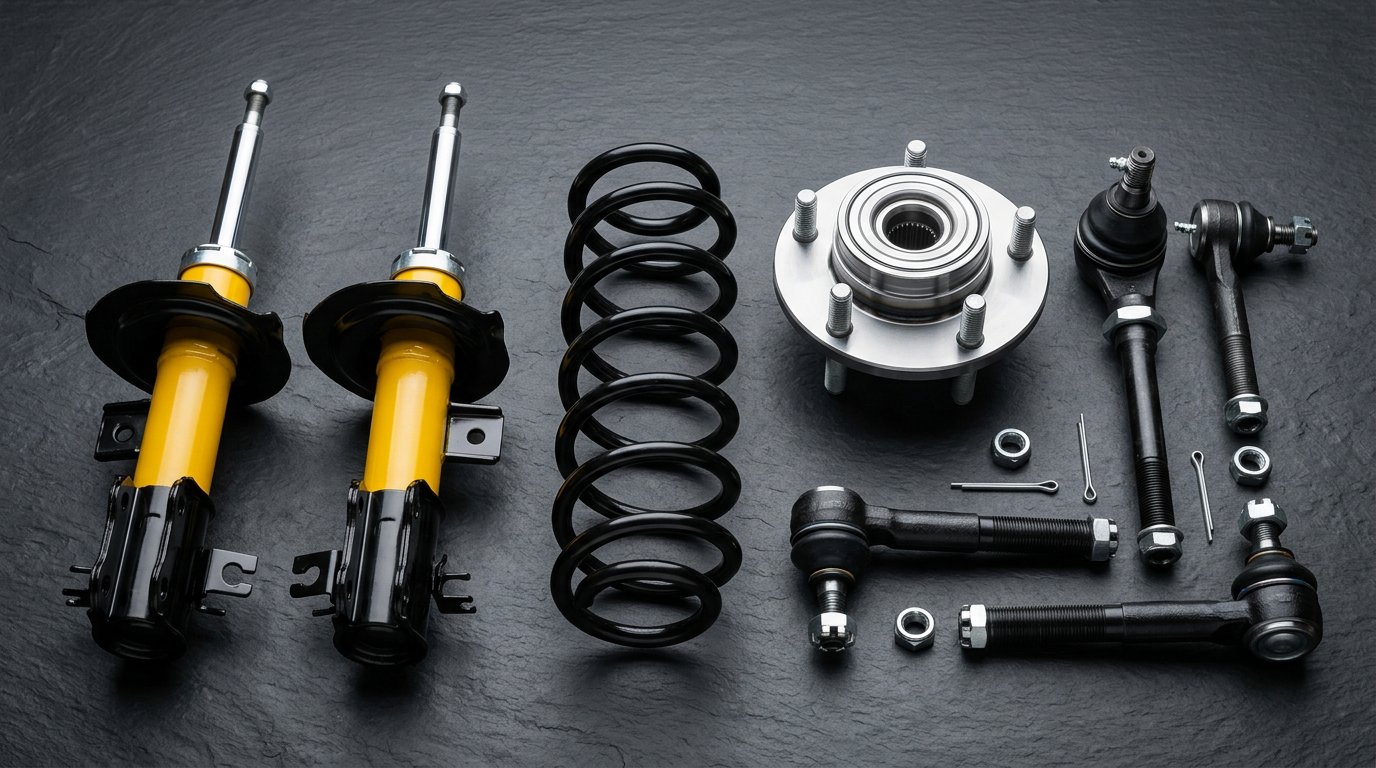
Genuine Toyota parts are manufactured or approved by Toyota and sold within the authorised network. OEM-equivalent parts are made by original-equipment manufacturers to a matching specification but branded by that manufacturer. Aftermarket parts are independent alternatives with their own warranty. Genuine parts cost the most and carry the strongest traceability; OEM-equivalent parts offer close quality at lower cost; aftermarket parts vary widely in quality.
The three grades, defined honestly
- Genuine Toyota: supplied in Toyota packaging through the authorised dealer network. Manufacturer warranty applies, traceable, guaranteed specification for your chassis.
- OEM-equivalent: produced by a company that also makes parts for vehicle manufacturers, to a specification matched to the original. Sold under its own brand. Warranty sits with the manufacturer, typically 6 to 12 months.
- Aftermarket: independent production, from reliable suppliers to unbranded copies. Quality range is enormous. Shortest warranty, least traceability.
Where genuine is worth the premium, every time
- Lubrication-critical items: oil filters, fuel filters (especially diesel common-rail), oil seals and gaskets for engine work.
- Safety-critical items: brake pads and discs, hub bearings, ball joints, tie rod ends, suspension components.
- Electrical and electronic components: alternators, starters, ignition coils, sensors, ECUs.
- Anything that requires the gearbox or engine to come out to replace: doing that job twice costs far more than the part difference.
Where a good OEM-equivalent makes sense
- Body panels, grilles, bumpers and mirrors on older vehicles where the value of the vehicle no longer supports genuine panel prices.
- Consumables where a reputable brand match is available and clearly labelled: wiper blades, cabin filters, cleaning products.
- Tyres, where brand choice is a legitimate decision about the kind of driving you do.
- Accessories and protection items: mats, covers, trim tools.
The hidden cost of a cheap part
A cheap water pump usually fails at the bearing or the seal, and when it lets go it takes the fan belt, sometimes the timing cover and occasionally the head gasket with it. A cheap fuel filter that bypasses destroys a set of common-rail injectors that cost many multiples of the filter. A cheap hub bearing fails, and in a Hilux that means a hub, an ABS sensor and an unplanned roadside recovery.
It is not that expensive parts never fail. It is that failures in the cheap tiers cluster around the moment when the part is doing the most work — under load, at heat, at speed.
How Arlington handles grade and price
Every listing states whether the part is Genuine Toyota, OEM-equivalent or aftermarket, and the warranty period is stated with it. Where a cheaper option exists we will tell you what it is and what you give up by choosing it. What we will not do is sell an alternative at a genuine price, or let a customer leave the counter unclear about which one they bought.
FAQs
Is OEM the same as genuine?
No. Genuine means approved and sold by the vehicle manufacturer. OEM means the part was made by an original-equipment manufacturer — it may be identical in specification, but it is not the manufacturer-branded part and its warranty sits with the part brand.
Are aftermarket Toyota parts always bad?
No. Some aftermarket parts come from the same factories that make OEM parts. The problem is unpredictability — without traceability you cannot tell which supplier made a given box, so quality varies part to part.
How much more do genuine Toyota parts cost in Nigeria?
Typically 20% to 60% more than a comparable OEM-equivalent, and considerably more than unbranded aftermarket. On filters and pads the gap is small in absolute Naira terms; on electrical and body parts it is larger.
Does using a non-genuine part void anything?
It does not void unrelated warranty, but a failure caused by a non-genuine part is not covered by the vehicle manufacturer's warranty for that system. Fitting a non-genuine part is a decision about where the risk sits.