
Buying Guides
How to Spot Fake Toyota Spare Parts in Nigeria (2026 Guide)
Arlington Parts Desk · 2026-07-08 · 8 min read
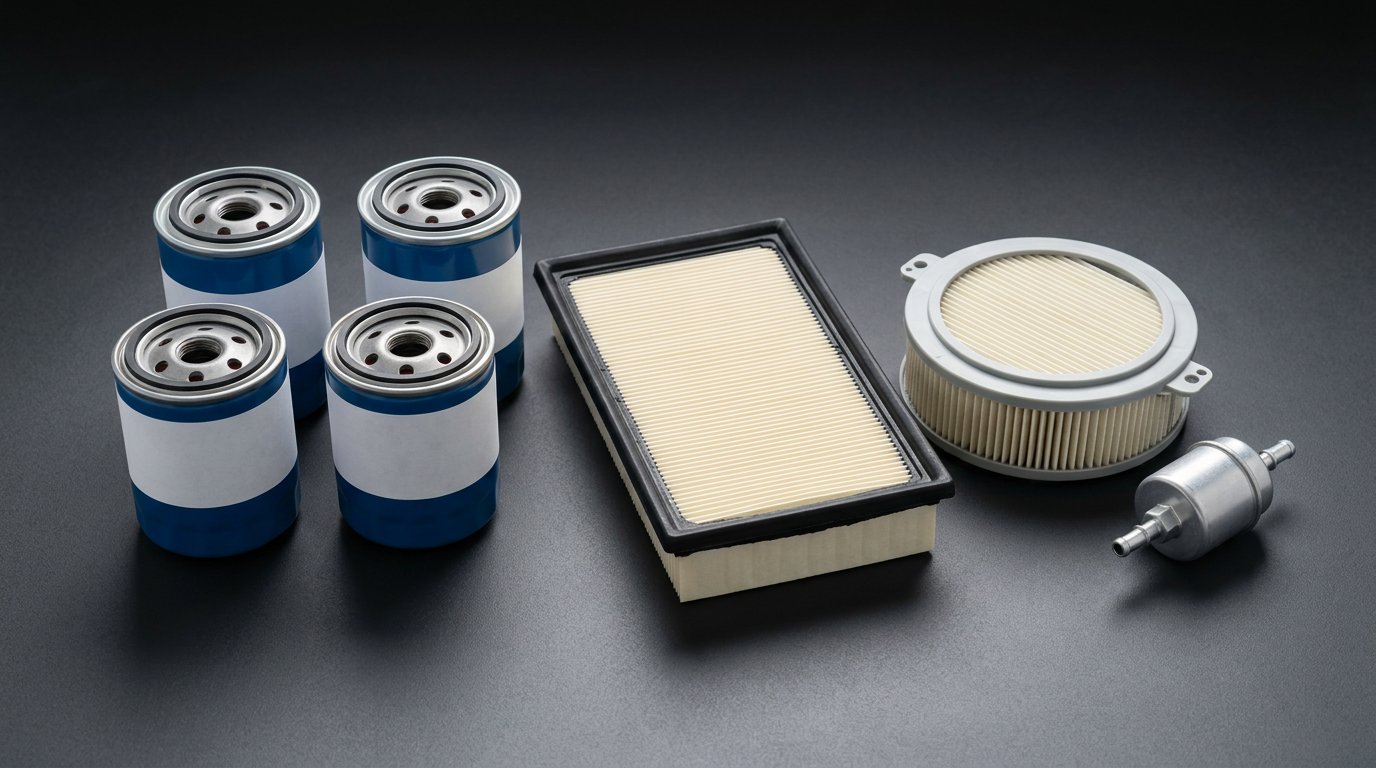
Check five things: the part number printed on the box must match the number on the part itself; genuine Toyota packaging has crisp printing with a consistent font and a legible holographic mark; the weight should match the specification for that part; the sealing and anti-tamper marks should be unbroken; and the seller should be able to trace the part through an authorised supply route. If any one of those fails, treat the part as counterfeit.
Why counterfeiting concentrates in filters, pads and belts
Counterfeiters follow volume and simplicity. Oil filters, brake pads, wiper blades and drive belts are high-turnover, low-cost, single-material parts that are easy to copy and hard to inspect once fitted. They are also the parts most likely to sit between you and a much larger repair bill: a copied oil filter that collapses dumps its filter media into the oil gallery, and a copied brake pad can delaminate under heat.
The market in Nigeria also has a genuine-vs-alternative confusion problem that counterfeiters exploit. Genuine OEM-equivalent parts exist legitimately and are perfectly reasonable purchases. Counterfeits are pretending to be genuine Toyota while being neither.
1. Match the part number on the box to the part number on the part
Genuine Toyota packaging carries the same part number that is stamped, printed or etched on the component itself. This is the single fastest check available. On a genuine oil filter, the number is printed on the can. On a brake pad set, the backing plate carries the number and, frequently, the Toyota cast marking and the friction-code edge code.
On a counterfeit, the box number is often right while the part number is missing, mismatched or printed in a different font. Some copies carry a plausible-looking number belonging to a completely different vehicle. Bring the part number, and let us cross-check it against the catalogue for your chassis.
2. Read the packaging the way a print shop would
Genuine Toyota cartons have consistent typography, clean edges, accurate colour registration and a legible holographic or tamper element that changes appearance as you tilt it. Copies usually show at least one of these: soft or slightly blurry small text, a colour that is a shade off, a hologram that is a printed flat image rather than a reflective shifting one, or English phrasing that does not read naturally.
3. Weigh it
Counterfeit parts save money by removing material. A copied brake rotor is noticeably lighter than the genuine rotor for the same vehicle, and a copied shock absorber loses gas charge and oil volume. If you have the old genuine part in your hand, put both on a kitchen scale. A difference of more than a few percent on a component like a rotor, ball joint or hub bearing is a warning.
4. Check the sealing, grease and finish
New genuine parts arrive clean and dry. Signs to reject a part: grease on the sealing surfaces of a hub bearing or ball joint before use, protective coatings that rub off on your hand, machining marks that are inconsistent across the same face, and O-rings that feel hard or sit loose in their groove. On filters specifically, look at the base plate thread and the anti-drainback valve — copies often omit a functional valve entirely.
5. Ask how the seller can trace it
Traceability is what separates a genuine supply route from a market purchase. A licensed parts dealer buys through the authorised network, which means a warranty claim has a documented path. Ask directly: which network did this part come from, and what happens if it fails within warranty? A trader who cannot answer that is selling you a part with no recourse.
What a genuine part actually costs you
Genuine parts cost more at the till and usually less over the year. A genuine Toyota diesel fuel filter is the clearest example: it is the difference between protecting a common-rail injector set that costs a multiple of the filter, or replacing it. If the budget genuinely will not stretch, buy a properly labelled OEM-equivalent part from a seller who stands behind it — not a counterfeit pretending to be genuine.
- Genuine: Toyota packaging, network traceability, manufacturer warranty.
- OEM-equivalent: made by an original-equipment manufacturer to a matching specification, sold under its own brand with its own warranty.
- Aftermarket: a budget alternative, labelled honestly, with the shortest warranty.
- Counterfeit: pretending to be genuine. No traceability, no warranty, unpredictable durability.
What we do at Arlington
Every part on our shelves is recorded against its supply route, and every sale carries an invoice with the part number on it. Where an item is not genuine Toyota, the listing and the invoice say so. You are always told which of the four categories above you are buying — that is the point of buying from a licensed dealership rather than a market stall.
FAQs
How can I tell if a Toyota oil filter is genuine?
Compare the part number printed on the filter can with the number on the box — they must match. Genuine Toyota filters also have crisp print, an anti-drainback valve that seals when you blow through the inlet, and a correctly formed base plate thread. A filter that is lighter than the specification or has no functional anti-drainback valve should be rejected.
Are all fake Toyota parts dangerous?
The dangerous ones are safety and lubrication-critical: brake pads and discs, hub bearings, ball joints, filters, belts and fuel system components. Cosmetic parts like trim clips usually will not hurt the vehicle, they simply fit badly and fail early. Treat anything that stops, steers, cools or lubricates the vehicle as safety-critical.
Can a workshop tell a fake part after fitting?
Often yes, but only after damage. A copied hub bearing is usually noisy within weeks, a counterfeit pad squeals or fades, and a copied water pump weeps or seizes. By then the labour has been spent twice. Checking before fitment is always cheaper.
Does Arlington sell non-genuine Toyota parts?
Yes, where a customer chooses a lower-cost option or where a genuine part is unavailable. Those parts are labelled clearly as OEM-equivalent or aftermarket on the product page and on the invoice, with their own shorter warranty. We never present a non-genuine part as genuine.